Buy Industrial Property Singapore: A Practical Checklist for B1 Buyers
Buying industrial space in Singapore is not like buying a condo, where the “better view” or “bigger balcony” usually settles the decision. Industrial property runs on permissions, technical fit, and the practical realities of how people and goods move.
If you are considering B1 industrial zoning, this is especially true. B1 is designed for clean industry and related uses, but it is not a free-for-all for anything that feels commercial. URA’s development control guidance sets the guardrails: B1 is intended mainly for clean industry, light industry, warehouses, public utilities and telecom uses. It also flags that uses that need a nuisance buffer of more than 50m are generally not allowed, while some general industrial uses may be considered case by case if buffer requirements are met.
So if you are a buyer shopping for B1 industrial property Singapore, your job is to verify that the property, the approved use, and your intended operations or investment plan can all coexist with the planning rules. The fastest way to lose money in industrial real estate is to buy something you later cannot use as planned, or that tenants avoid because of operational constraints.
This guide is built as a practical checklist and a decision framework for B1 buyers, with extra attention to what matters on the ground for strata industrial units Singapore, freehold industrial property Singapore, new launch industrial property Singapore, and the real-world comparisons of B1 vs B2 industrial zoning.
What B1 planning really means for your purchase
B1 zoning decisions are not just about the building name on a brochure. URA’s use quantum guidance is one of the most important practical rules for buyers: at least 60% of the floor area (GFA) in a B1 development or strata unit must be used for industrial purposes. The remaining area is limited to ancillary and supporting uses, and approved secondary uses.
That 60% requirement affects more than compliance. It shapes what a tenant is willing to rent, how flexible a unit is for mixed uses, and how the building’s layout supports an industrial workflow rather than an office-only arrangement.
URA also notes that B1 commonly suits light manufacturing and similar clean uses, with some non-industrial uses potentially needing separate approval or being constrained. The practical takeaway is simple: before you assume your business model “should be okay,” you should confirm that the intended trade aligns with the approved use for that unit and that it can meet the industrial use quantum.
If you are comparing options in city-fringe areas such as Tai Seng industrial property or Paya Lebar industrial property, the same zoning logic still applies. City-fringe industrial precincts are often favoured for e-commerce, light manufacturing, R&D, and urban logistics because they are closer to workforce catchments and transport links. URA’s planning also shows B1 industrial clusters around city-fringe MRT areas. Convenient location can improve tenant demand, but it does not relax B1’s industrial-use constraints.
B1 vs B2: the mismatch risk that hurts investors
A common buyer mistake is treating B1 as a softer version of industrial zoning. It is not. The planning intent matters because B2 is the heavier-industrial category, while B1 is for cleaner, lighter uses.
Your comparison should not stop at “B2 is more industrial.” It should go deeper into what the market expects the space to support. JTC’s listings and unit specifications for B2 commonly show higher floor loading and different height specs than B1 flatted factories, which reflects potential for heavier use. Even if you are not buying a unit today that triggers heavy requirements, the broader point is that B2 often fits a different operational profile and may attract different tenant types.
For buyers, the biggest risk is buying the wrong zoning for your use case and then discovering too late that the trade-off works against you. If your operations require the kind of buffer that exceeds B1’s general nuisance buffer threshold, you may run into planning constraints. Even if a use is theoretically possible, it may depend on separate approvals and conditions.
If your strategy is investment focused rather than owner-occupied, B1 vs B2 also affects resale and rental liquidity. Industrial property resale is typically sensitive to approved use, lease tenure, strata size, and building specs, because buyers and tenants are evaluating whether they can operate there within the rules.
Freehold vs leasehold industrial space in Singapore
A lot of buyer conversations start with a simple desire: “I want freehold.”
In Singapore, freehold industrial space is relatively scarce. The supply that dominates new industrial stock is often leasehold. JTC’s estate and unit pages commonly show lease terms such as 60-year, 30-year, or 20-year lease terms for industrial sites, depending on the estate and product. When you are shopping for freehold industrial property Singapore, you should treat it as a specific feature, not a default assumption.
The business implication is straightforward. Leasehold tenure can affect pricing, buyer appetite, and your endgame timing for exit. Freehold typically gives longer certainty for investment planning, but the scarcity also means opportunities may be fewer and more competitive when they appear.
When you evaluate buy industrial property Singapore options, do not just compare unit size. Compare the lease profile and think about how it interacts with your intended investment horizon, your financing plan, and the likely tenant base for B1 industrial space in that building.
Strata industrial units: the technical checks are not optional
Most buyers looking at B1 will spend a lot of time comparing floor plans and marketing photos. That is understandable, but in strata industrial assets, the technical checks drive the outcome.
JTC’s materials and unit examples consistently highlight key checks, including floor loading, ceiling height, goods-lift access, loading-bay provision, and whether the trade matches the approved use.
Here is what that means in practice:
If the unit’s specs cannot support your goods movement and equipment, you can lose operational efficiency immediately. If the goods-lift access or loading-bay arrangement does not fit your workflow, you may pay for fit-out changes you did not budget for. If your tenant later wants a trade that is inconsistent with the approved use quantum, they may refuse the unit even if the location is excellent.
So for strata industrial units Singapore, especially in B1 developments, your due diligence should treat the unit’s technical readiness and approved-use alignment as part of the “core product,” not as minor details.
Ramp-up vs flatted access: logistics is a tenant magnet
Industrial space is physical. People do not just rent a postcode, they rent a loading and movement solution.
JTC describes that ramp-up factories provide direct vehicular access to units for loading and unloading. Flatted factories are generally accessed via common corridors, lifts and loading bays. This affects logistics efficiency, truck access, and fit-out flexibility.
A ramp-up layout can reduce friction for certain businesses, particularly those that rely on regular direct loading/unloading. A flatted configuration can still work well, but you need to validate whether the access workflow matches how your tenant operates, including any reliance on goods lifts and common loading bays.
When you evaluate ramp-up industrial units Singapore, do not view ramp-up as a generic “better” feature. It is better if the tenant workflow benefits from direct access. It is less compelling if the tenant’s operational model does not require it, or if their constraints are more about trade permissions and internal layout.
New launch and approved uses: plan for the paperwork reality
Buyers often focus on “new launch industrial property Singapore” as a way to get a cleaner building, newer systems, and potentially stronger leasing prospects.
But in industrial real estate, approvals and operational fit still matter. If you buy a new industrial property, your due diligence should still validate the approved use regime and ensure it fits the B1 industrial-use expectations.
Also, if the new property is sold by a GST-registered seller or developer, buyers must pay GST on the purchase. IRAS states that buyers of non-residential properties must pay GST if the seller is GST-registered. That can change the total cash requirement, even before you consider stamp duties and financing structures.
Stamp duty and the “what does not apply” misconception
Industrial buyers sometimes carry over residential assumptions, especially around ABSD.
For industrial property acquisitions, Additional Buyer’s Stamp Duty (ABSD) does not apply. IRAS explains that ABSD applies to residential property acquisitions, while industrial transactions are subject to normal BSD rules. On disposal, Seller’s Stamp Duty (SSD) can apply for industrial property depending on holding period.
IRAS outlines SSD for industrial property disposals based on holding period:
- 15% if sold within 1 year
- 10% if sold within 1 to 2 years
- 5% if sold within 2 to 3 years
- none after 3 years
This matters for investment strategy. If you are buying B1 industrial space and plan to flip within short windows, the SSD schedule can quickly erode the economics. Many industrial investors end up using longer holds, simply because the rental cycle and leasing pipeline are not designed for rapid churn.
Industrial property rental yield: what you can infer, and what you must verify
Industrial property can sometimes produce stronger rental yields than residential, but liquidity and tenant quality are trade-specific. The planning constraints for B1, including the industrial-use quantum and allowable use boundaries, mean the tenant pool is not “everyone.” It is businesses that can operate within the clean industry and light industrial profile and that can meet the approved use and operational needs.
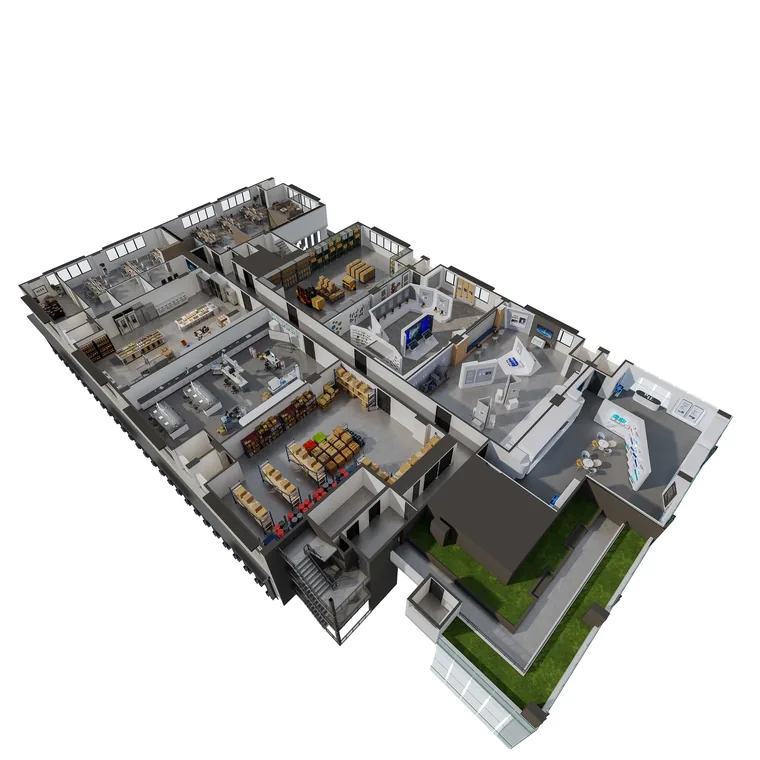
It is reasonable to infer that in some circumstances, industrial units may deliver attractive industrial property rental yield Singapore outcomes because of their focus on revenue-generating operations rather than end-user lifestyle demand. But yield cannot be validated with a generic rule. It depends on: 1) whether the building can attract and retain tenants who fit B1 approved uses
2) whether the unit’s technical specs support the tenant’s workflow 3) lease tenure and how it affects pricing and tenant willingnessIn other words, yield is not just a number you calculate upfront. It is a function of tenant fit and operational survivability.
Buying under company name: keep an eye on the transaction structure
Many buyers consider purchasing under a company name, especially if the asset is tied to business usage or held for investment.
IRAS stamp duty discussions treat entities differently in some residential ABSD contexts, but for industrial property SSD, IRAS applies the SSD on disposal based on holding period regardless of your buyer profile. The verified point you should carry forward is this: SSD can still apply for industrial disposals, so structure is not a way to avoid the holding period rules.
If you are considering buying industrial property under company name, treat the structure as an operational and financing decision, not a stamp-duty bypass. Confirm the stamp duty implications for your exact transaction with the relevant professionals, and align it with how you intend to use the unit.
Industrial property loan Singapore: financing is not one-size-fits-all
The financing side for industrial assets tends to be different from residential. Lenders often assess non-residential property investment under commercial terms. MAS materials and market practice indicate financing generally depends on the lender’s assessment, and non-residential loans may not follow residential housing-loan rules.
So when you evaluate industrial property loan Singapore options, do not assume that a “similar value” industrial deal will be financed like a condo. Your loan terms could be shaped by:
- the lender’s view of the asset’s rental profile and approved use
- the lease tenor, including whether you are dealing with freehold vs leasehold
- the technical and operational readiness, since that supports tenant demand
The practical approach is to line up your financing assessment early, before you lock into a shortlisting frenzy. Industrial listings can look similar on price per square foot, but lender comfort can vary substantially based on the unit specs and approved use fit.
A practical checklist for B1 industrial buyers
If you only remember one thing, remember this: B1 is a clean/light industrial framework, and your unit must be capable of operating inside it. Your checklist should combine planning compliance, technical readiness, and exit realism.
Core checklist before you sign
Here is a tight set of items you can work through without turning your process into a paperwork marathon.
- Confirm B1 industrial-use expectations, including the rule that at least 60% of the floor area/GFA in a B1 development or strata unit must be used for industrial purposes, with the remainder limited to ancillary/supporting and approved secondary uses.
- Validate the approved use and ensure the intended trade matches the approved use constraints for that specific unit, not just the building or estate.
- Check technical readiness using the kinds of specs highlighted by JTC guidance: floor loading, ceiling height, goods-lift access, and loading-bay provision.
- Verify access logistics for the unit type, especially whether it behaves like a ramp-up arrangement with direct vehicular access or a flatted configuration accessed via common corridors, lifts and loading bays.
- Review tenure and exit risk, noting that freehold industrial space is relatively scarce and JTC industrial sites commonly have lease terms like 60-year, 30-year, or 20-year depending on the estate and product.
This list is “core” because each item connects directly to a planning or operational barrier that can impact leasing, compliance, and long-term value.
A second layer checklist: investment details that trip up buyers
Once the core fit is confirmed, your second layer is about transaction economics and tenant reality. This is where careful buyers avoid nasty surprises.
Start with stamp duty and tax timing. IRAS says ABSD does not apply to industrial property acquisitions, but SSD can apply on disposal based on holding period. If your strategy requires a shorter hold, run the SSD schedule into your numbers from day one. Also remember that if you buy a new non-residential property from a GST-registered seller or developer, GST is payable on the purchase.
Next, take a hard look at “what kind of tenant this unit can support.” A B1 unit can work for light manufacturing, food packing or processing-related uses, e-business, printing or publishing, media and similar clean uses, with some non-industrial uses needing separate approval or being constrained. If your business model or target tenant sits on the borderline, you should not treat “case by case” as comfort. It means approvals and conditions could affect timelines and viability.
Then, look at logistics. If you are choosing between different warehouse and factory layouts, access can change the tenant profile. Ramp-up convenience can reduce friction, while flatted access can still succeed but requires a tenant workflow that fits common corridor and lift arrangements.
Finally, check financing feasibility. Because non-residential loans can be under commercial terms, and financing depends on lender assessment, you should avoid falling in love with a unit before the loan is sensibly structured. Confirm how the lender views the unit’s approved use alignment and lease tenure.
Common buyer scenarios for B1 industrial property
Scenario 1: you want a city-fringe base for light operations
Many investors prefer city-fringe industrial property Singapore locations because of workforce proximity and transport links. If you are looking at precincts like Tai Seng or Paya Lebar, your decision still hinges on B1 constraints.
Your success formula is to pair location advantages with an operational plan that fits B1’s clean/light intent. Make sure the unit supports goods movement and loading requirements, and verify the industrial-use quantum can be met in the way your tenant would actually run the business.
Scenario 2: you are buying as an operating company, not just a landlord
If you will operate out of the space, the trade matching and technical specs become even more important. Buying under a company name can make sense operationally, but do not let Space Nova B1 industrial structure distract you from the core compliance requirements for B1 and the approved-use alignment.
Also, if you anticipate changing uses later, remember that B1’s allowed uses and the industrial quantum requirements are not just marketing phrases. They determine what your space can support when you need flexibility.
Scenario 3: you are chasing freehold value as a long hold
If you are specifically hunting freehold industrial property Singapore, you will likely spend more time waiting for the right opportunities because freehold industrial space is relatively scarce. When you find one, treat it as a major variable in your analysis, not just a bonus.
For your exit plan, consider that even if your unit is freehold, liquidity still depends on approved use and technical fit. Your long hold does not eliminate the reality that buyers and tenants are selective about trades and specifications.
Scenario 4: you are comparing B1 strata units vs heavier B2 options
If you are torn between B1 vs B2 industrial zoning, start by mapping your intended operations to planning requirements and practical build specs. JTC examples suggest B2 units commonly show different height specifications and higher floor loading potential than B1 flatted factories, reflecting heavier use potential. If your business does not need the heavier profile, B1 may fit better. If your business is moving toward heavier equipment or processes, you may be better served by B2 even if it feels less “flexible.”
Edge cases that deserve extra caution
Industrial deals often look straightforward until you hit a detail that changes everything.
One recurring edge case is the misunderstanding of nuisance buffer requirements. URA notes that uses that need a nuisance buffer of more than 50m are generally not allowed in B1, while some general industrial uses may be considered case by case if buffer requirements are met. If your process has strong noise, vibration, emissions, or similar nuisance factors, do not assume “industrial” automatically fits. You need the specific planning alignment.
Another edge case is mixed-use expectations. Even if you can operate a clean industrial business in one part of the unit, B1’s industrial-use quantum rule sets the boundaries for how much of the floor area must be industrial. If your plan relies heavily on ancillary or secondary uses, you should sanity-check whether it still meets the 60% industrial requirement.
A final edge case is logistics workflow. Buyers sometimes view loading access as a minor convenience. For tenants, it can be a deal breaker, especially when goods movement is frequent. The difference between ramp-up direct access and flatted common access can decide whether a tenant can operate efficiently without major additional fit-out.
How to use this checklist while viewing properties
A practical way to avoid analysis paralysis is to structure your viewing notes around planning fit and operational fit, not just aesthetics.
At each viewing, write down what you can verify. Focus on whether the unit supports the kind of trade allowed for B1 and whether it has the technical elements highlighted by JTC guidance, including floor loading, ceiling height, Space Nova price goods-lift access and loading-bay provision. If you are looking at ramp-up factories or units with direct access, note how vehicles reach the loading area and whether that matches your anticipated workflow.
When you see multiple options, your decision should become easier because the differences are no longer vague. You can evaluate which unit can actually be used, leased, and held with the least friction under B1 conditions.
Quick reference: B1 buyer priorities that stay relevant
Even as you move from shortlisting to offer, the priorities do not change.
You are essentially choosing a combination of approved-use compliance, industrial-use quantum capability, technical readiness for goods movement, and a lease tenure profile that fits your holding horizon. If you keep those four pillars in view, your process stays grounded, and you avoid the common mistake of treating B1 as a broad label rather than a governed industrial category.
That is the real advantage of a checklist approach. It forces clarity early, and industrial property rewards buyers who show discipline at the start, because the market does not pause for wishful thinking later.